Bruichladdich 
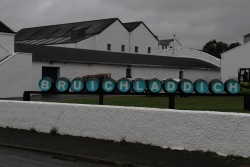
The distillery is located on the Rinns of Islay peninsula and was established in 1881. It had a difficult life with several owners, closing in 1994 and re-opening in 2001. It originally had its own maltings but these were removed and it now obtains its peated barley from Bairns of Inverness, though it uses Islay barley for its unpeated Islay editions. Bruichladdich produces three distinct ranges: unpeated as Bruichladdich, 35ppm peated as Port Charlotte and 160-350ppm as Octomore. The original Loch Indaal distillery in Port Charlotte closed in 1929 and a few of the old distillery buildings remain and some are used for maturing the "Port Charlotte" brand.
Production is 1,500,000 litres per year. The distillery is owned by Remy Cointreau. Distillery output prior to 1994 was used for blending into White Horse.
Festival Bottlings
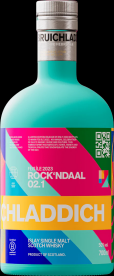
Bruichladdich ROCK'NDAAL 02.1 distilled in 2006 and aged 16 years - official description is "With its 16-year age, the delightful impact of French oak harmonises flawlessly with the distinctive fruity and floral aromas that define this single malt. Bright and fresh, mirroring the lively party atmosphere of Rock’ndaal itself, a medley of fresh tropical fruit is immediate on the palate, with ripe melon, honeyed peach, lychee and sweet mango coming to the fore. Made with fully traceable organic barley, the single malt balances citrus freshness with a subtle mineral quality, nodding to its all-Islay maturation."
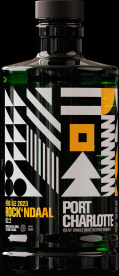
Port Charlotte ROCK'NDAAL 0.2.2 distilled in 2006 and aged 16 years - official description is "This remarkable expression is matured in a combination of refilled wine casks and sherry butts, allowing the rich influences of the wood and the wine to shape its character. Furthermore, its 16-year all-Islay maturation period imparts a profound depth to the versatile Port Charlotte liquid. A rich dram with incredible depth and complexity, the influence of the sherry cask is unmistakable on the final Rock’ndaal 02.2 spirit - imparting notes of rich Christmas cake, sultanas and raisins. Showcasing Port Charlotte’s signature balance of intense peat smoke and delicate fruit, the single malt also brings a hint of sweet honey, chocolate and tobacco â€" adding to its smooth, rounded mouthfeel."
Feis Ile 2023 Masterclass £75
I missed out on the Masterclass ballot this year but attended the ticketed festival day that was limited to 2500 guests.
What's in a number?
.1 editions are distilled from 100% Scottish barley. In recent years they have been primarily aged only in ex-American oak, in varying percentages of different ex-bourbon and ex-Tennessee whiskey casks. They are the backbone of each new series as they demonstrate the raw character of the clean Octomore spirit balanced with the neutral American oak casks.
.2 editions are distilled from 100% Scottish barley, as per their .1 counterpart, but matured in European oak casks along the lines of ex-Amarone, ex-Sauternes, ex-Austrian sweet wines and the like.
.3 editions are distilled from 100% Islay barley. They are single estate, single vintage bottlings from barley grown on farmer James Brown’s land. These whiskies are generally matured in a mixture of ex-American and ex-European oak, subject to change for each edition.
.4 editions first came onto the scene during the 7th series and maturation is in some virgin oak that introduces a tannic and spicey taste. Occasionally, the .4 edition is something weird and wonderful.
Warehouse No 6 Tasting
I attended two tastings on different occasions, one hosted by Lewis and the other by Catriona. There were the usual three casks available, one for each of the core expressions:
- 2007 15 year old Bruichladdich Islay Barley, Troon variety, 56.4%. 5y second fill bourbon then first fill Jack Daniel's, unpeated
- 2015 8 year old Port Charlotte peated to 40 ppm, 64%, 3 years in PX casks then 5 years Heaven Hills bourbon
- 2010 13 year old Octomore peated to 96ppm, 4 years in bourbon, 4 years in Sauternes and 4 years in neutral casks, 58%. Neutral casks impart very little additional flavour but allow the whisky to continue to age.
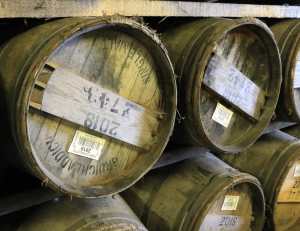 In France, red wine casks are susceptible to mite infestations so the cask end is wrapped in reeds that encourage spiders who then eat the mites.
Cask heads are often strengthened using a broad piece of wood and six wedges, usually on the bottom end of the cask.
In France, red wine casks are susceptible to mite infestations so the cask end is wrapped in reeds that encourage spiders who then eat the mites.
Cask heads are often strengthened using a broad piece of wood and six wedges, usually on the bottom end of the cask.
Purchases
Various 20cl bottles for friends and...