
ABV, UK AND US PROOF
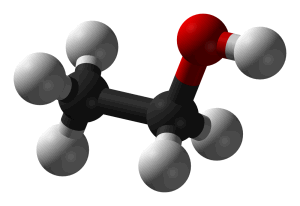
The strength of alcoholic drinks is measured by the amount of ethanol it contains. Different countries have different ways to show this to the consumer with Alcohol By Volume (ABV) being most common.
Alcohol By Volume (ABV)
ABV is a standard measure of how much ethanol is contained in an alcoholic drink. It is defined by the number of millilitres (mℓ) of pure ethanol that are present in 100mℓ of solution at 20°C. The ABV value is shown as a percentage, for example 46%, followed by ABV.
Alcohol Proof
There are two "proof" specifications in use and both use the ° symbol to indicate that it's proof and not percent:
- one that originated in the UK and is 1.75 times the ABV value resulting in 175° being equivalent to 100% ABV.
- one that originated in the US that is 2 times the ABV value resulting in 200° being equivalent to 100% ABV.
In the UK, prior to 1980, bottles were labelled with the contents' strength in proof, for example, "70° proof", which indicated a 40% ABV. To avoid confusion between the different proof specifications the UK switched to showing ABV only. Leading up to the changeover date in 1980 both proof and ABV were frequently shown together.
While proof is no longer used in the UK, some products still use the proof value in their name, for example, Glenfarclas 105, which is 105° proof / 60% ABV.
Likewise, in the US, some products have the proof strength in their name, for example, Wild Turkey 101, which is 101° proof; / 50.5% ABV and Bacardi 151° which is 75.5% ABV.
Others products look like they might have their strength in their name but do not; Maker's Mark 46, actually 74° proof / 47% ABV.